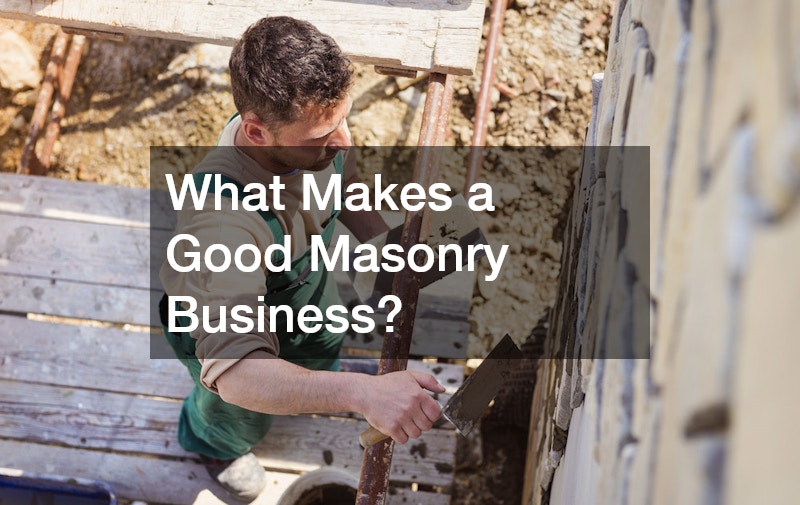
A good masonry business begins with a strong foundation, similar to the sturdy structures it aims to build. This foundation is built on knowledge and expertise in the trade. The masonry industry relies heavily on skills that must be honed over time, as the ability to craft structures from stone and brick is a craft requiring precision and patience.
Mastery of these skills sets a business apart, as customers respect and seek out businesses that demonstrate a high level of craftsmanship and competence. To succeed, operators must continually educate themselves, keeping abreast of industry trends, new technologies, and evolving customer preferences.
The foundation of a masonry business also includes business acumen. Understanding the financial, operational, and logistical aspects of running a masonry business is crucial. This includes effective project management skills, which ensure that projects are completed on time and within budget. Additionally, a successful business will have strong marketing strategies in place to attract new clients and maintain relationships with existing ones. When these fundamentals are in place, the business is well-positioned for growth and sustainability in a competitive market.
The Importance of Professionalism and Customer Service
Professionalism in a masonry business goes beyond the bricks and mortar—it extends into every interaction with clients. The way a business communicates, responds to inquiries, and handles complaints defines its level of professionalism. Having experienced professionals who respect schedules and keep projects on track exemplifies a commitment to client satisfaction. This professionalism helps build trust and assures clients that they are making the right choice. For example, promptly returning calls or emails, providing clear and detailed estimates, and maintaining a transparent conversation about project expectations are all essential facets of professionalism in the masonry business.
Moreover, effective communication is at the heart of excellent customer service. This involves not just speaking to clients but truly listening to their requirements and feedback. A business that prioritizes effective communication is better able to meet client needs and make adjustments as necessary. Successful masonry businesses often utilize CRM (Customer Relationship Management) systems to track customer interactions and ensure consistent communication throughout the project’s lifecycle. By maintaining this level of attention, businesses can ensure projects run smoothly, thereby maximizing customer satisfaction and retention.
The Role of Innovation in Today’s Masonry Business
In today’s rapidly evolving construction landscape, innovation plays a critical role in setting a masonry business apart. Embracing new technologies and materials can lead to enhanced efficiency and creativity in project execution. For instance, the use of computer-aided design (CAD) technology and 3D modeling allows businesses to create precise plans and offer clients visual previews of their projects. These innovations not only streamline processes but also offer customers a more interactive experience, helping make decisions easier and more informed. In the realm of materials, sustainable and eco-friendly options are gaining popularity and catering to a more environmentally-conscious clientele.
The role of innovation also extends to the business model itself. The use of data analytics allows for better forecasting and resource allocation, minimizing waste and optimizing efficiency. Furthermore, innovation in marketing strategies, such as leveraging social media platforms and digital marketing, expands a business’s reach and attracts a broader customer base. By establishing a presence online, masonry businesses can showcase their portfolio and connect with clients globally. Investing in innovation not only serves immediate business interests but also appeals to a forward-thinking clientele eager to partner with progressive companies.
Building a Workforce Fit for a Successful Masonry Business
A skilled and motivated workforce is the bedrock of a successful masonry business. Employees who are well-trained and dedicated to their craft are invaluable assets, ensuring quality workmanship and customer satisfaction. Training programs and apprenticeships are essential to cultivating talent, allowing workers to develop the skills necessary to excel in their roles. Investing in employee development not only improves the quality of work but also fosters a loyal and committed workforce. This commitment to staff development often results in lower turnover rates and a culture of personal and professional growth within the business.
Moreover, the workforce must also be adaptable and open to continuous learning. The masonry industry, like many others, is subject to shifts in technology and consumer demands. Encouraging workers to pursue further education and attend workshops can motivate them to stay informed about industry trends. A dynamic and forward-thinking team is essential for a business to navigate changes and seize new opportunities. By cultivating a workforce that embraces lifelong learning and adapts to change, a masonry business sets itself up for long-term success and sustainability in an ever-evolving market.